 LOUISCAUFFMAN.COM
Solution Focused Theory
Solution Focused ‘Theory’
The Basic Rules!!!:
- If something (still) works well (enough), don’t fix it.
- If something works (good or good enough), just continue with it and/or do more of it.
- If something doesn’t work (anymore or no longer good enough), stop it, learn from it and do something else.
- If something works (good enough), learn it from someone else and/or offer it to someone else.
These rules are applicable to all situations:
- If the intervention you do together with your client(s) work well, you can tick off all four rules.
- If your intervention does not work, check which rule(s) you forgot and/or overstressed and do apply another rule
(By the way: the rules are applicable to themselves and as such they form a genetic or Darwinian algorithm)
How can you define the Solution Focused Approach?
The human image behind the Solution Focused Approach assumes that every human system at all times has resources at its disposal, no matter how difficult and hopeless the situation may seem. By recognizing the efforts and difficulties, we increase the chance that the client will feel understood and therefore the motor of change, i.e. the working relationship will start. In this working relationship, we, the client and the coach/therapist, co-create an alternative possible reality. This puts the following statement at work: hope is to our mind what oxygen is to our lungs.
The starting point are our three mandates of leader (guiding), facilitator (developing) and manager (directing) so that we can respond flexibly to what is required at that moment so that we can help the other to reach his goals.
How we rather NOT define the SF approach.
All too often SF is reduced to techniques we like to call the Gang of Four:
- The more compliments the better.
- In every conversation one has to use scale questions and the miracle question.
- You only have to look for exceptions to the problem.
- Every human being is the expert of his own life.
If you reduce the richness of the solution focused epistemology to these four techniques, you don’t have to be surprised that many people – clients and students and colleagues – drop out.
The Formula-P:
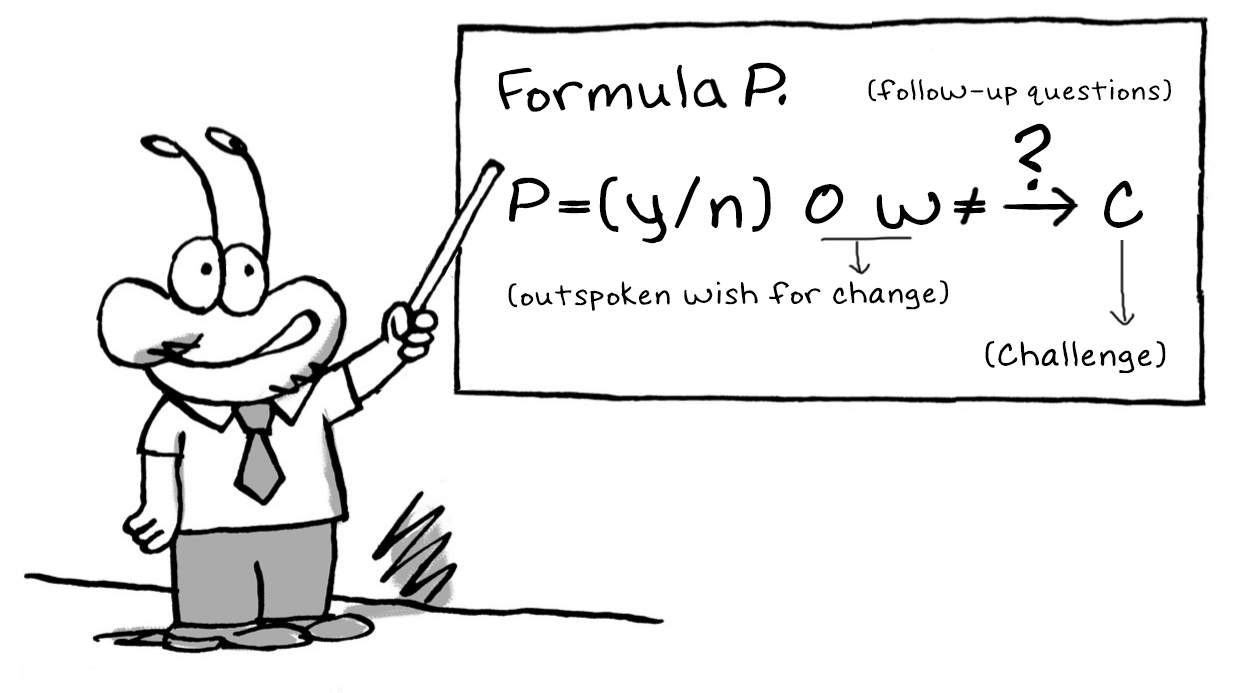
- A problem can be defined as a wish for change (sometimes this wish is outspoken, sometimes it is kept silent), which – with the help of the correct questions – we can help the client translate into a challenge. In other words: the more problems, the better.
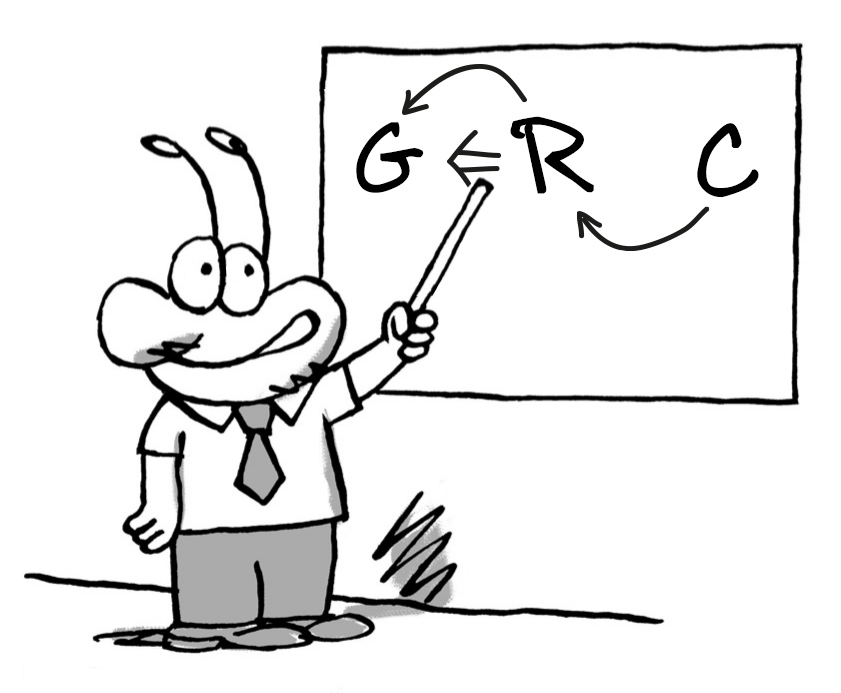
- G=R x C (Successfully obtaining your goals result from the combination of Resources and Compliments).
Is the solution focused approach an Evidence-Based Model?
YES.
The numbers?
120 studies, 23 RCT’s (Randomized Control Trials) show effectiveness of which 12 RCT’s show more effect than the existing treatments. 36 out of 45 comparative studies show significantly higher effects for solution focused work. On n=5.000 cases, effectiveness studies show a success rate of over 60% with an average of 3-6 sessions. 2 meta-analytical overview studies on a total of 43 studies show, compared to the classical approaches, that OGW achieves the best results in the field of ‘personal behavior change’.
For details we refer to our SOL T.E.A.M. associate Dr. Alasdair McDonald in his book ‘Solution Focused Therapy: theory, research and practice’ SAGE 2011, 2cond edition.